ServicesDental Implants
Dental Implants in Double Oak, TX
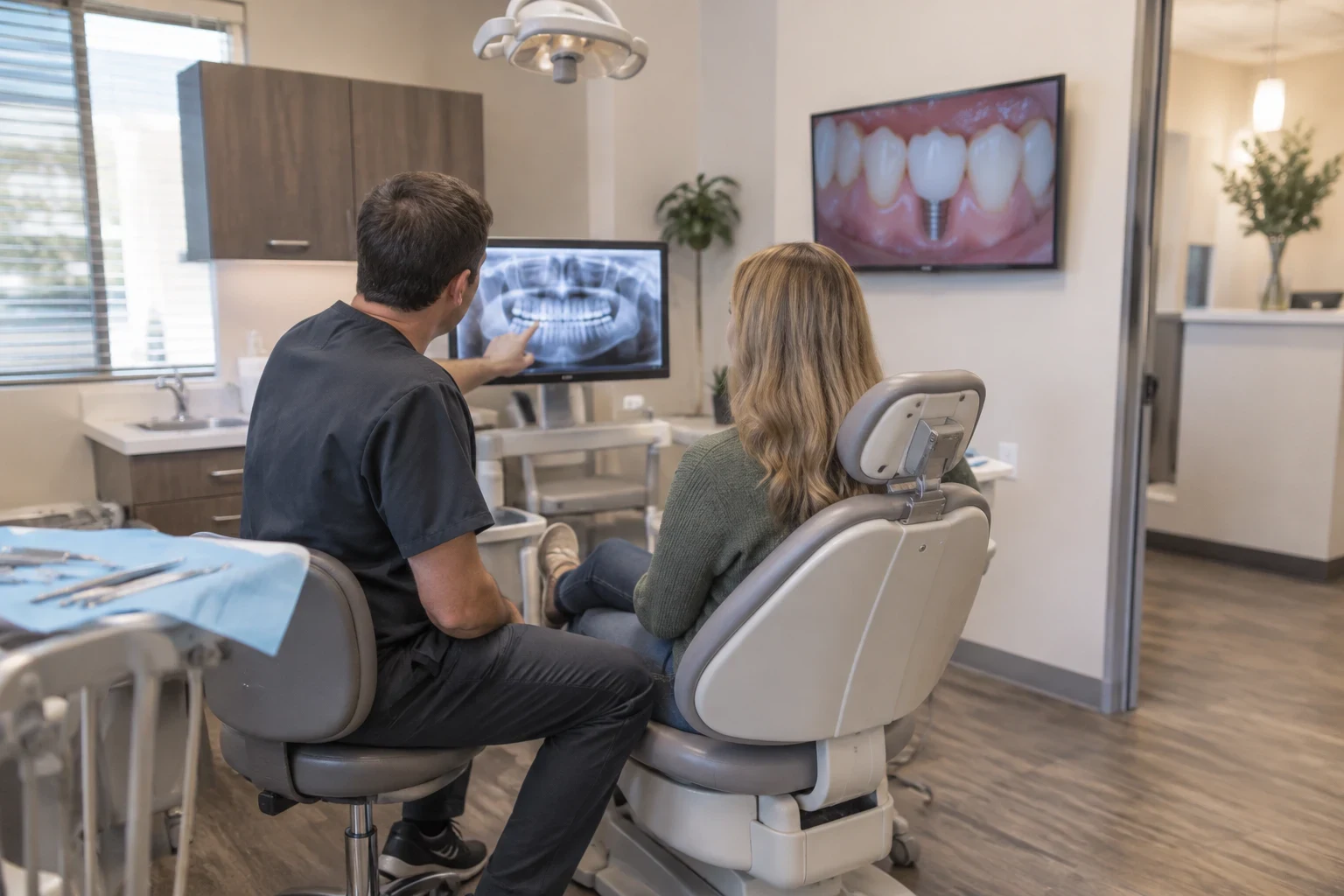
If a missing or failing tooth has you chewing on one side, an implant can give you a stable bite again. We start with a careful exam and, when needed, a 3D CBCT scan, then explain what we found before suggesting any treatment plan.
How an implant replaces a lost tooth
A small titanium post takes the place of the missing root and sits in your jawbone. During the next few months, bone fuses snugly around it. After that, we add an abutment and a custom crown that looks natural and handles chewing like your own tooth. A bridge needs the teeth on either side shaved down; an implant leaves them alone.
Implants aren't the best fit for every patient. Bone loss after an old extraction, gum disease that hasn't been treated, heavy smoking or poorly controlled diabetes can each shift the plan. So we examine first and only then make a recommendation. If a bridge, a partial or a full denture is the better choice for you, you'll hear that from us.
A lot of the people we see have delayed this for years, uneasy about the cost or about being pushed into extra work. At the end of your first visit, you'll understand your X-rays, see your options compared side by side and have room to decide in your own time.
Every stage of your implant care
- 01
Focused evaluation with 3D imaging
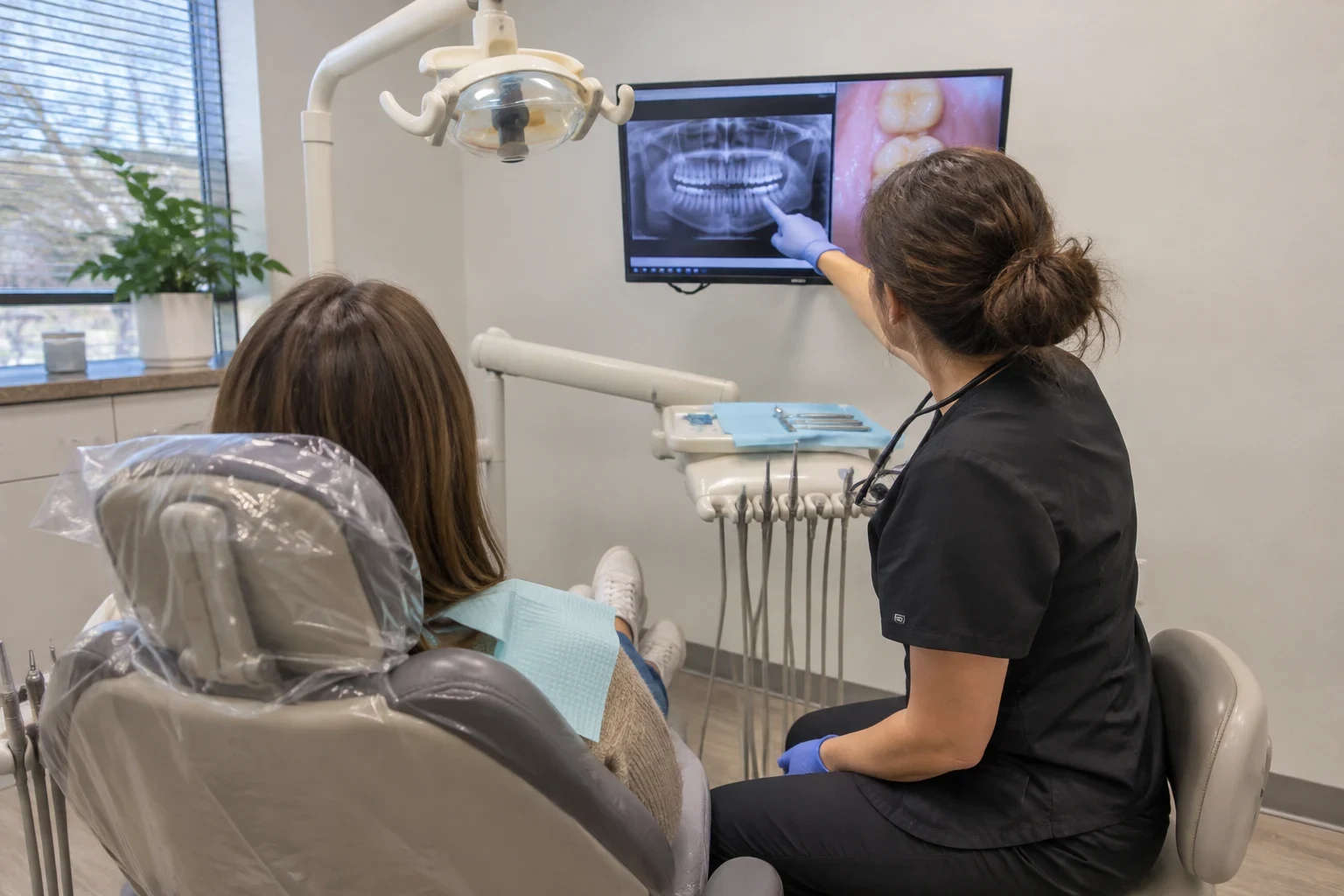
For $25, the focused evaluation gets you digital X-rays and a full exam, a CBCT scan if needed, plus treatment planning and a consultation. The 3D image maps your bone height and width and shows where the nerve and sinus lie, so the post is set where it can hold for years.
- 02
Placing the post
We place the implant right here in our office after numbing the area with local anesthetic. Plenty of patients say it was easier than the extraction they had before.
- 03
Bone grafting if your scan shows a need
Thinned bone can be built back up with a graft. Depending on your case, that happens at the implant visit or a few months before it. We point it out on your scan so you can see the reason for it, or the reason you can skip it.
- 04
Abutment and matching crown
Once the site has healed, we attach the abutment and seat a crown shaded to blend with your natural teeth. Then we fine-tune your bite so the new tooth carries no more load than the ones next to it.
- 05
Implants that steady a denture
When most or all teeth are missing, a few implants can lock a denture in place so it stays put while you chew and speak. You'll find more on these choices on our Dentures page.
Questions about Dental Implants?
Call(940) 283-0407Signs an implant may be worth asking about
A gap you chew around
If you have learned to keep food on one side of your mouth, that side is doing double duty. Over time the extra wear shows up on the teeth that are left.
A tooth that cannot be saved
A crack below the gumline or a tooth that has failed after a root canal often ends in removal. Planning the implant before the extraction can make the site easier to rebuild. See our Extractions and Root Canals pages for those steps.
A denture that rubs or loosens
Sore spots, adhesive that never quite holds and a lower denture that lifts when you talk are common reasons patients ask about implant support.
Teeth drifting into an old gap
When a tooth has been missing for a while, the teeth beside it tip and the one above can drop. Catching this early keeps your options open.
A bridge that keeps failing
Decay under a bridge can take the anchor teeth with it. An implant stands on its own and does not lean on its neighbors.
How implant treatment runs, step by step
- 1
Exam, scan and plain findings
We look at your teeth, gums and bone, take digital X-rays and a CBCT scan if needed, and walk you through the images on screen. You hear what is healthy, what is not and what we would do about it.
- 2
A treatment plan you can read
Each stage is written out with its cost, including any graft or extraction. Take it home, check it against your insurance and call us with questions.
- 3
Placement visit
Once you are numb, the post is placed through a small opening in the gum. Most people return to normal routines the next day with soft foods and over-the-counter pain relief.
- 4
Healing time
The bone usually needs about three to six months to bond with the implant. Where it makes sense, we fit a temporary tooth so you are not walking around with a gap.
- 5
Crown fitting and follow-up
We attach the abutment, seat your crown and fine-tune the bite. A follow-up check makes sure the gum is healthy around the new tooth.
What shapes the price of your implant
We don't name a figure before the exam, because the price depends on what the scan shows and how many teeth need replacing. Once your evaluation is done, we write out the cost of every stage and note what your insurance is likely to pick up. The bill won't grow partway through treatment.
- How many teeth, and what goes on top
- A single post with a single crown is the most straightforward case. When several teeth are gone, an implant bridge may fit better, and a whole arch is often handled with an implant-supported denture.
- The state of your bone and gums
- Gum disease must be cleared up before a post goes in, and thin bone may call for a graft. Each adds a step, and each helps the implant last.
- A tooth that still needs to come out
- When a damaged tooth is still in the socket, its removal becomes part of the plan and shows up as its own line on the estimate.
- Insurance or membership
- Our office is in-network with 15+ major PPO dental insurance plans, and we'll help you read what your plan pays for. If you have no insurance, our In-house Membership Plan is an option.
- Spreading out payments
- Financing at 0% interest is available for up to 24 months. Seeing whether you're preapproved won't affect your credit score.
Questions patients ask about dental implants
Does getting an implant hurt?
We numb the area thoroughly with local anesthetic, so during placement you notice pressure, not pain. Most patients are a little sore for a few days afterward. Soft foods and over-the-counter pain relief are usually all it takes.
How long does the whole process take?
With healthy bone and one missing tooth, expect about three to six months between placing the post and seating the final crown, and most of that is quiet healing. Needing a graft or an extraction first stretches the schedule. We'll write your expected dates into the plan we give you so you know what's coming.
Have I waited too long to get an implant?
Often not. The jaw does lose bone once a tooth is gone, but a graft can frequently build it back. Your CBCT scan shows exactly how much bone is there, and we'll tell you honestly what it allows.
Will my PPO insurance pay for implants?
It depends heavily on the plan. Some PPO plans help with the implant or the crown, and others pay only for the exam or the extraction. Since we're in-network with 15+ major PPO dental insurance plans, we can look up your benefits before any work begins.
How long do implants last?
The post itself can last for decades with daily brushing, flossing and regular checkups. The crown handles chewing every day and could need replacing down the road. Gum disease and smoking are the biggest risks, so we cover both before you start.
Can the implant go in when the tooth comes out?
In some cases, yes. When the scan shows enough healthy bone and no infection, the post can be placed at the same visit as the extraction. Otherwise we let the socket heal or graft it first, so the implant has firmer support.
Find out if an implant is right for you
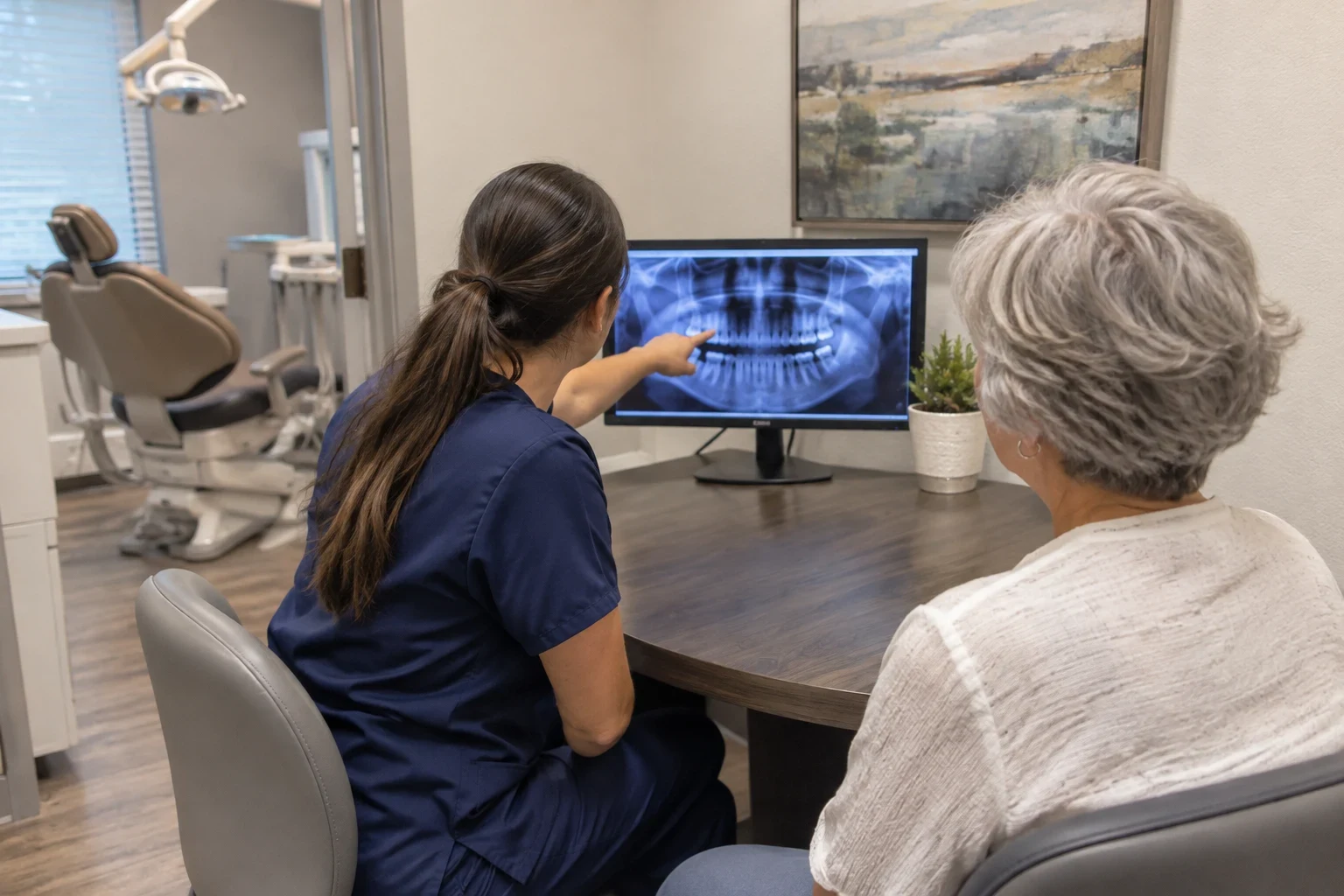
One visit gets you an exam, a scan if needed and a clear answer about your options. We welcome patients from Double Oak, Flower Mound, Highland Village and the surrounding area.