ServicesRoot Canals
Root Canals in Double Oak
A deep toothache or a tooth that lingers on hot coffee usually means the nerve inside is inflamed or infected. We look first, show you the X-rays, and tell you plainly whether a root canal can save the tooth before we recommend anything.
Saving the Tooth You Already Have
At the center of each tooth sits the pulp, a pocket of nerve and blood vessels. If decay, a deep crack or a leaking old filling lets bacteria in, that tissue becomes inflamed and eventually dies, and the infection can move into the bone around the root tip. A root canal clears out the damaged pulp, disinfects the canals and seals them, so the tooth stays in place and keeps doing its job.
Not every painful tooth needs one, and not every tooth can be saved. Some pain comes from a sinus, a bite problem or gum inflammation. Some teeth are cracked below the gumline and would fail even after treatment. That is why we start with an exam and imaging, and if a tooth is not a good candidate we will say so and talk you through extractions or dental implants instead.
What Your Root Canal Treatment Includes
- Exam and digital X-rays
- We test the tooth with cold and light tapping, check the gums around it and take digital X-rays. If the roots curve or a canal may be hiding, we add a CBCT scan.
- Thorough numbing
- We confirm the area is numb before we begin and give more anesthetic if you feel anything. Many patients tell us it felt much like having a filling done.
- Cleaning and shaping the canals
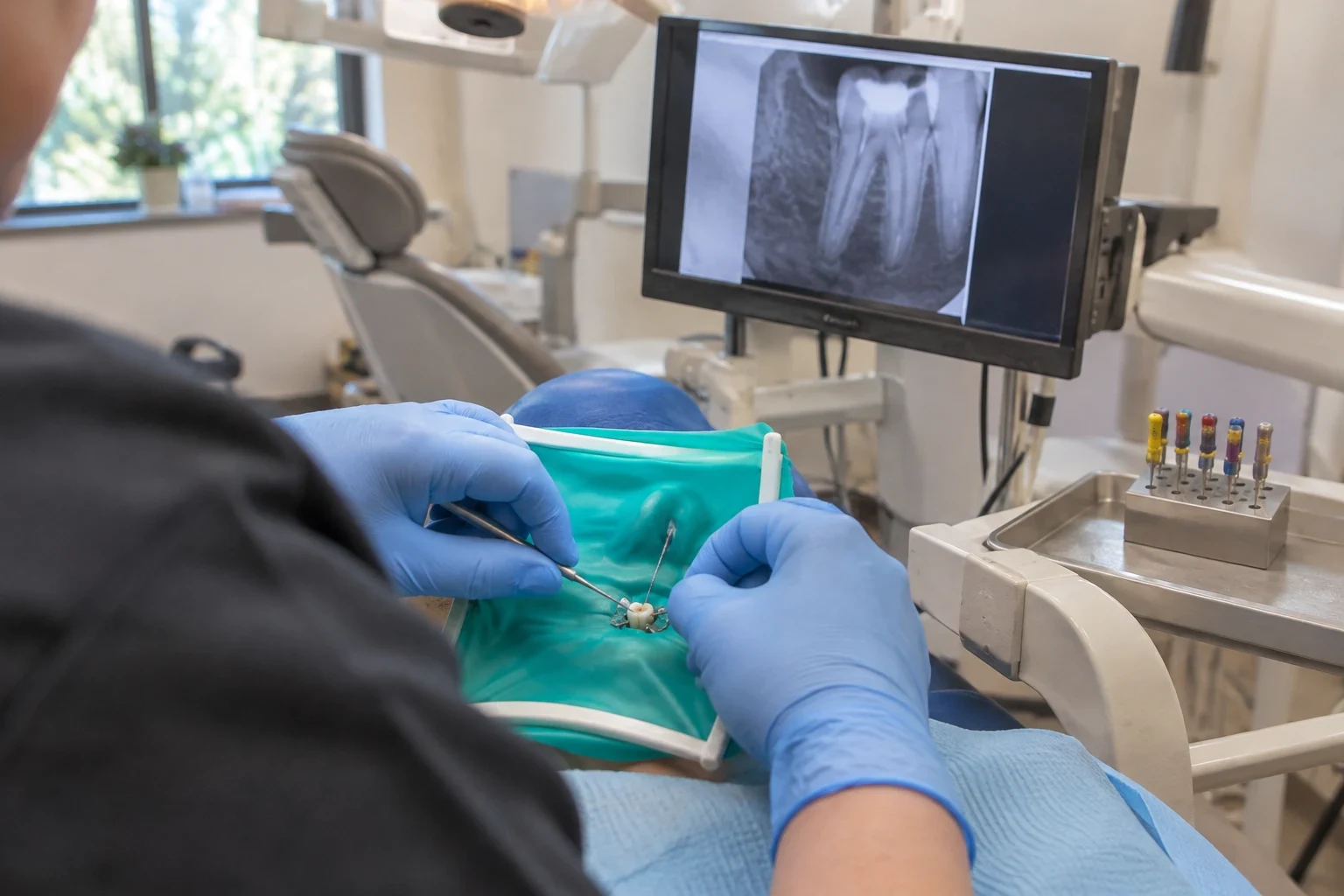
- Slender instruments remove the infected tissue, and each canal is rinsed with a disinfecting solution. We isolate the tooth with a small latex-free sheet so saliva stays out and the canals stay clean throughout.
- Sealing and a protective filling
- Each canal is filled with a flexible sealing material and closed off. A filling covers the top of the tooth until its final restoration goes on.
- Talking through the crown early
- Molars and premolars become more fragile once the nerve is removed, so most of them need a crown to avoid cracking. We bring that up at the start, so it is part of your treatment plan and never a surprise later.
Signs a Tooth May Need a Root Canal
Temperature sensitivity that hangs on
A brief twinge from ice water that disappears right away is often nothing serious. When the ache from coffee or a cold drink stays for a minute or longer, the nerve inside is likely irritated.
Throbbing that wakes you up
Pain that gets worse when you lie down, or starts with nothing setting it off, often means the pulp is inflamed.
A bump on the gum that drains
A small raised spot on the gum near the tooth, sometimes with a salty taste, often points to an abscess. Draining can take the edge off the ache, but the infection is still there.
A tooth turning gray
A tooth that darkens after a fall or a knock may have a nerve that is dying, even if it does not hurt yet.
Tenderness when you bite
If chewing on one side hurts, or the tooth feels a little higher than the ones beside it, inflammation at the root tip is a likely cause.
What Affects the Cost of a Root Canal
Your estimate comes after the exam, once we know which tooth is involved and what the X-rays show. Two things drive the number: the tooth itself and what it needs once treatment is done. We also go over how your insurance applies before anything starts.
Which tooth
Front teeth usually have a single canal. Premolars can have two, and molars often have three or more, which means more chair time and more careful work.
Infection and anatomy
Canals that bend sharply, run narrow or have hardened with calcium take longer to clean. An active abscess may also call for medication before or after treatment.
First treatment or retreatment
Redoing an older root canal means removing the original filling material first, so that visit runs longer.
The crown afterward
Most back teeth need a crown once the root canal is finished. We include it in your estimate so the full cost is in front of you from the start.
Insurance and payment options
Our office is in-network with 15+ major PPO dental insurance plans. Patients without coverage can join our in-house Membership Plan. Financing is available at 0% interest for up to 24 months, and seeing whether you preapprove has no credit score impact.
How Your Visit Goes
- 1
Look first
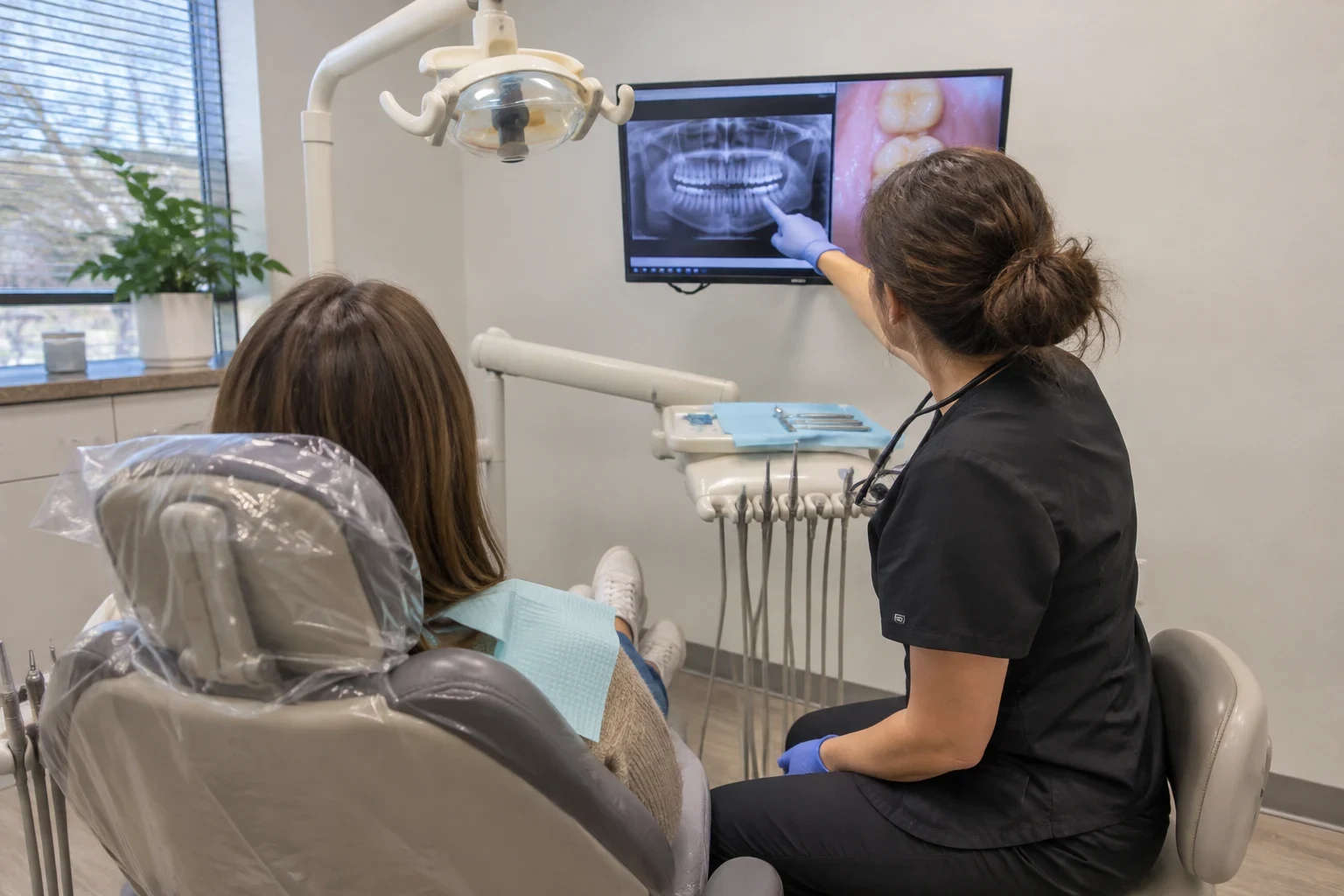
We examine the tooth, take X-rays and show you what we see on the screen. You hear whether the tooth can be saved, what the other options are and what each one involves.
- 2
Numb and protect
Once you decide to go ahead, we numb the area and place a rubber shield around the tooth. You can raise a hand any time you need a break.
- 3
Clean and seal
We open a small access point, clean each canal and seal it. Front teeth often take one visit, while molars with three or four canals can take longer or need a second appointment.
- 4
Recover and restore
Expect some soreness for a few days, usually managed with over-the-counter pain relievers. We then schedule the crown or final filling that protects the tooth for the long run.
Root Canal Questions
Is a root canal painful?
Most of the pain people connect with root canals comes from the infected tooth, not the treatment. We work only after the area is completely numb, so patients usually notice pressure and little else. Expect the tooth and gum to feel tender for a few days, and ordinary pain relievers typically handle that.
Would it be better to just pull the tooth?
Sometimes, and we will say so if that is the case. When the roots are healthy and enough of the tooth remains, keeping it is usually simpler than replacing it. If it is split deeply or has too little support, an extraction followed by a dental implant may be the better choice.
Can I drive myself home and go back to work?
Most patients do. The numbness lasts a few hours, so wait to eat until feeling returns. Chew on the other side and avoid hard foods there until the final crown or filling is placed.
Why do I need a crown after a root canal?
With the pulp gone, the tooth no longer has its own blood supply and slowly becomes more brittle. Back teeth handle the heaviest chewing, and a crown wraps around them so they are far less likely to split.
I am not sure my tooth needs a root canal. What should I do first?
Book our $25 Focused Evaluation. It includes a comprehensive exam and digital X-rays, a CBCT scan if the tooth calls for one, and a consultation where we build your treatment plan. You leave knowing what is going on with the tooth and what your choices are.
Find Out What Is Going On With That Tooth
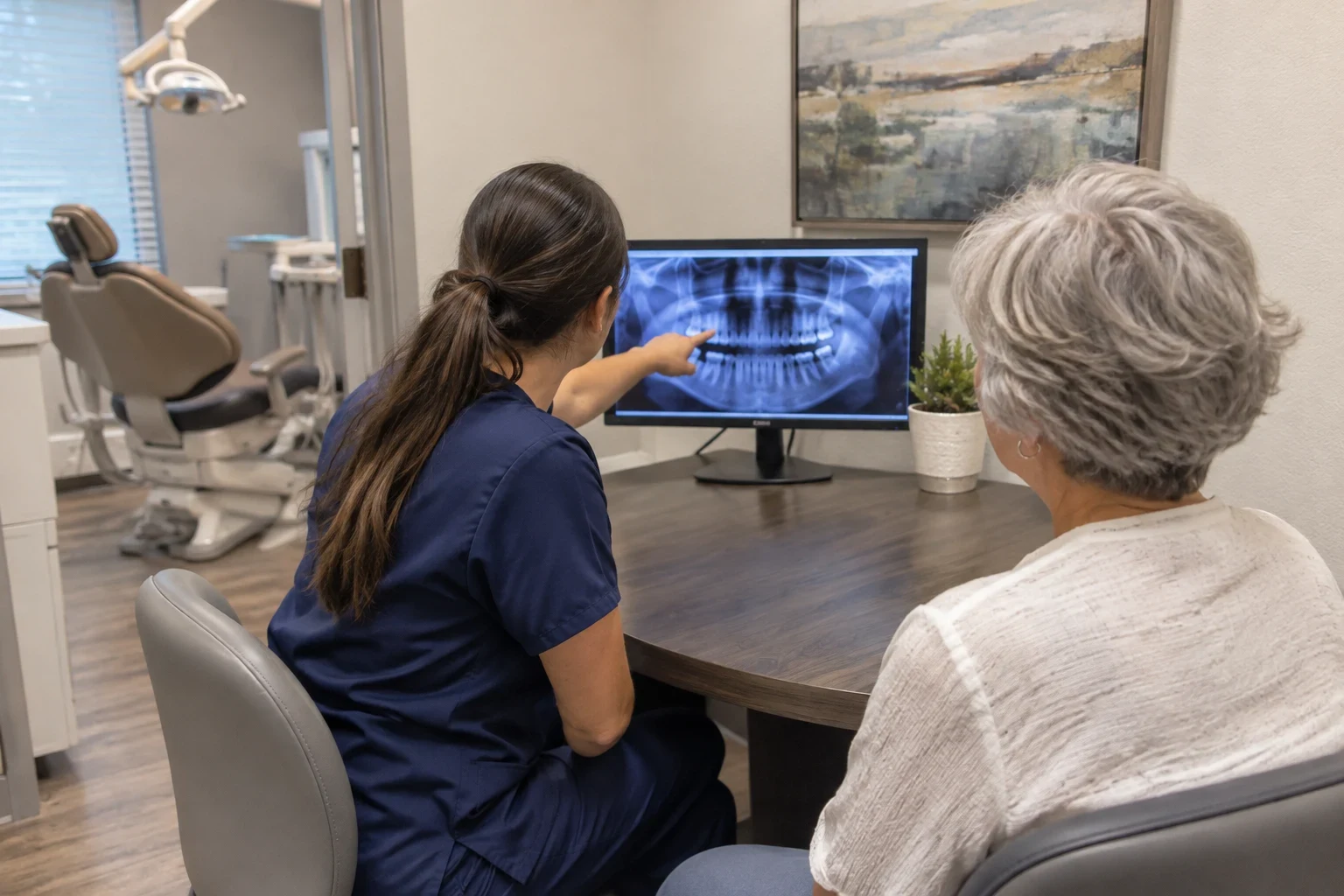
We will examine it, show you the X-rays and explain your options in plain terms. Patients from Flower Mound, Highland Village and the rest of the area come to us for exactly that kind of straight answer.