ServicesWisdom Teeth Removal
Wisdom Teeth Removal in Double Oak
Not every wisdom tooth has to go. We start with a careful look and clear imaging, show you what we see, and recommend removal only when the tooth is causing trouble or is likely to. When it does need to come out, we keep you comfortable and informed.
When wisdom teeth should come out, and when they can stay
Wisdom teeth are the last molars to arrive, usually in the late teens or twenties. Some come in straight, fully through the gum and easy to clean. Those can often stay. Others get stuck under the gum or bone, grow in at an angle, or push only partway through, leaving a flap of gum that traps food and bacteria.
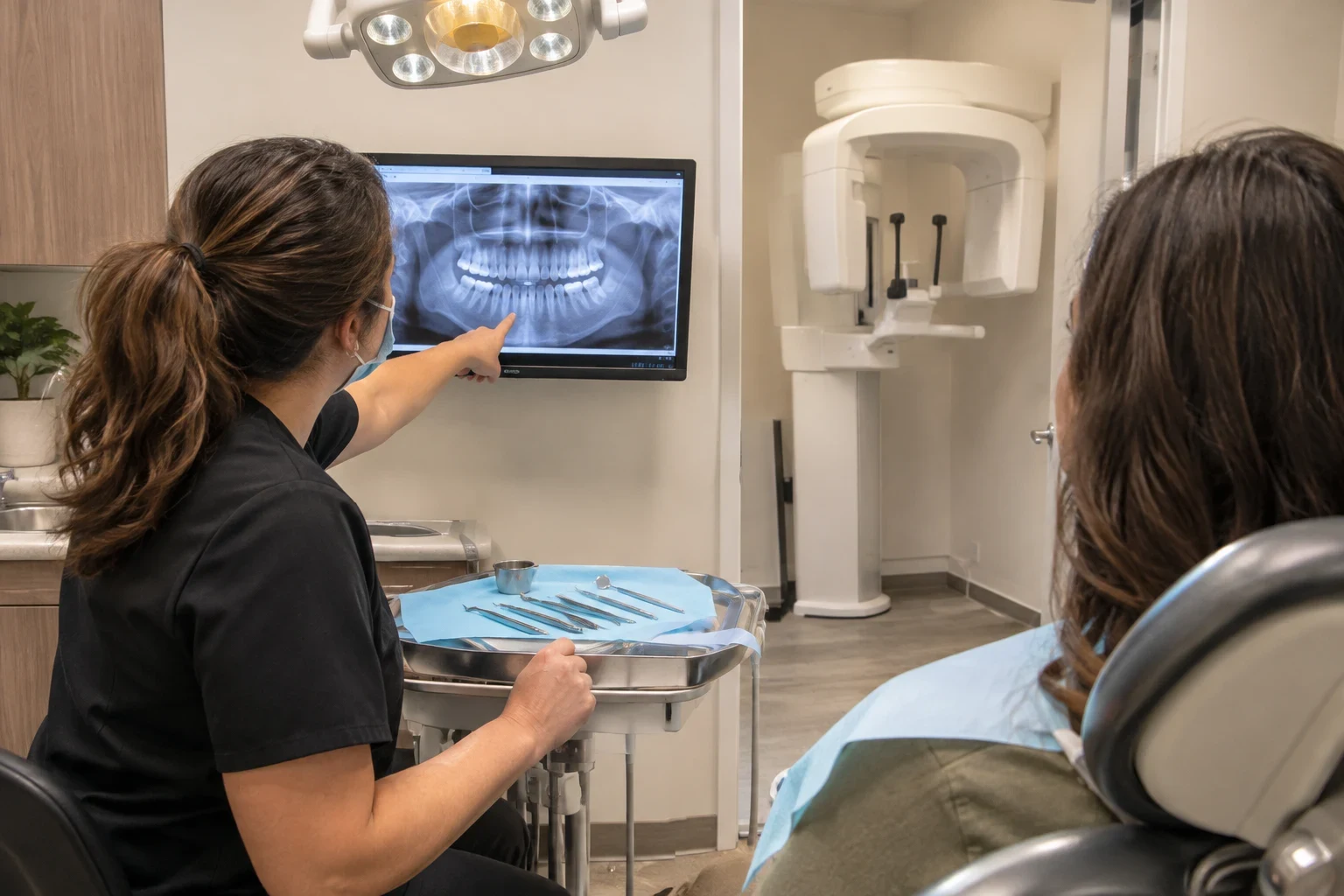
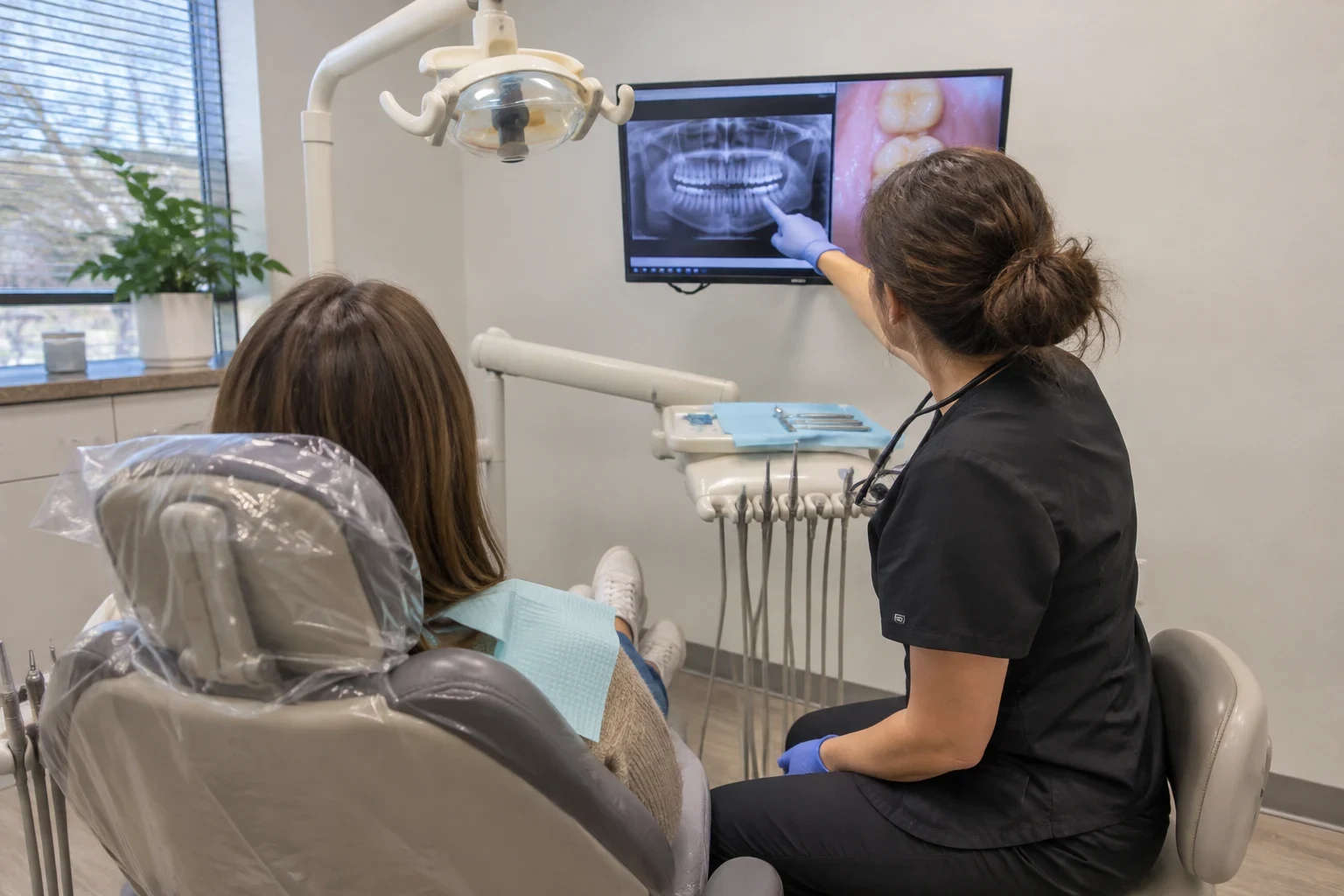
Our job is to tell those situations apart. We look at the position of the tooth, how close its roots sit to the nerve in the lower jaw, and the health of the molar in front of it. Then we explain what we found in plain words, with the images on the screen in front of you, so the decision is yours to make with real information.
Patients come to us from Double Oak and nearby towns like Flower Mound, Highland Village and Lantana, often after a dull ache that comes and goes for months.
What we do from first look to final check
A close look and digital images
We start by checking the gum tissue around every wisdom tooth for puffiness or deep pockets. Digital X-rays then show us the whole tooth, roots included, even the parts still tucked below the gum.
3D CBCT imaging when it matters
For lower teeth whose roots look close to the nerve, a CBCT scan shows the relationship in three dimensions. That helps us plan a gentler, safer removal and tell you honestly if anything about your case needs extra care.
A written treatment plan
You leave knowing which teeth we recommend removing, which can stay, and why. The plan lists each step so there are no surprise add-ons on the day.
Removal with local numbing
We numb the area thoroughly and check that you feel pressure, not pain, before we begin. Simple erupted teeth often lift out in minutes, while impacted teeth may need a small opening in the gum and the tooth removed in sections.
Aftercare and a follow-up check
You get gauze, clear written instructions and a follow-up to make sure the sockets are closing well. If something feels off during healing, we want to hear about it.
Signs your wisdom teeth may need attention
- Pain or pressure at the back of the jaw
- An ache behind your last molar, sometimes spreading to the ear or temple, often points to a wisdom tooth pushing against bone or the tooth next to it.
- Swollen, sore gum over a tooth
- A tender flap of gum over a partly erupted tooth can trap food and become infected. It may flare, settle down, then flare again.
- Bad taste or breath that won't clear
- Food and bacteria caught around a wisdom tooth can leave a sour taste even after brushing.
- Trouble opening your mouth
- Stiffness in the jaw or pain when chewing can come from inflammation around a lower wisdom tooth.
- Decay on the molar in front
- A wisdom tooth leaning into its neighbor creates a spot that is almost impossible to clean, and cavities often start there first.
How removal works, step by step
- 1
Look first
We examine the area and take the images needed to see the whole tooth and its roots. Nothing gets removed at this first visit unless you and the dentist agree it makes sense.
- 2
Talk through the findings
We show you the images, explain whether the tooth is impacted or healthy, and go over the options, including leaving it and watching it. You get the cost before you decide.
- 3
Removal day
After the numbing takes full effect, we loosen and remove the tooth, sectioning it if it sits under bone. We place stitches if they are needed and gauze to control bleeding.
- 4
Healing at your own pace
Most patients rest for a day or two, eat soft foods and use ice for swelling. We check the sites at a follow-up visit and answer any questions along the way.
What affects the cost of wisdom teeth removal
Each tooth is priced on its own, based on what the imaging shows. Once we have looked, we give you a clear plan with the cost of every step so you can check your insurance or plan your budget before anything is scheduled.
- How the tooth sits
- A fully erupted tooth is a simpler removal than one partly covered by gum. A tooth fully buried in bone takes the most time and care.
- Number of teeth
- Removing one tooth costs less than removing all four, though taking several out in one visit can mean a single recovery.
- Need for 3D imaging
- A CBCT scan is added only when the roots appear close to the nerve or the X-ray leaves questions open.
- Your insurance coverage
- PPO plans often cover part of a medically needed removal. We check your benefits and explain what your plan is likely to pay.
Wisdom teeth questions we hear often
- Do my wisdom teeth have to come out if they don't hurt?
- Not always. A tooth that is fully erupted, cleanable and not harming its neighbor can often stay with regular checkups. We recommend removing a pain-free tooth only when imaging shows a real problem, such as decay, bone loss or damage to the next molar.
- Will I be awake during the removal?
- Yes. We use local anesthetic to numb the area fully, and we test it before starting. You will feel some pressure as the tooth loosens, but you should not feel sharp pain. If you need a break at any point during the procedure, just raise your hand and we will stop.
- How long does recovery take?
- Most people feel noticeably better within three to four days, with full gum healing over the next few weeks. Impacted teeth usually take a little longer than simple removals. Skip straws and smoking for the first few days to protect the blood clot in the socket.
- Do you take my insurance?
- We are in-network with 15+ major PPO dental insurance plans, and we look up your coverage before any treatment is scheduled. If you don't have insurance, ask about our in-house membership plan.
- Can I spread out the cost?
- Yes. We offer 0% interest financing for up to 24 months. Checking for preapproval has no impact on your credit score, and we are glad to go over the details with you while we review your treatment plan.
- What does the first visit cost?
- The first step is our $25 focused evaluation. For that, the dentist does a full comprehensive exam and takes digital X-rays, adding a CBCT scan only if your case calls for one. We finish with treatment planning and a consultation, so you leave knowing if your wisdom teeth should come out and what would happen next.
Find out what your wisdom teeth are doing
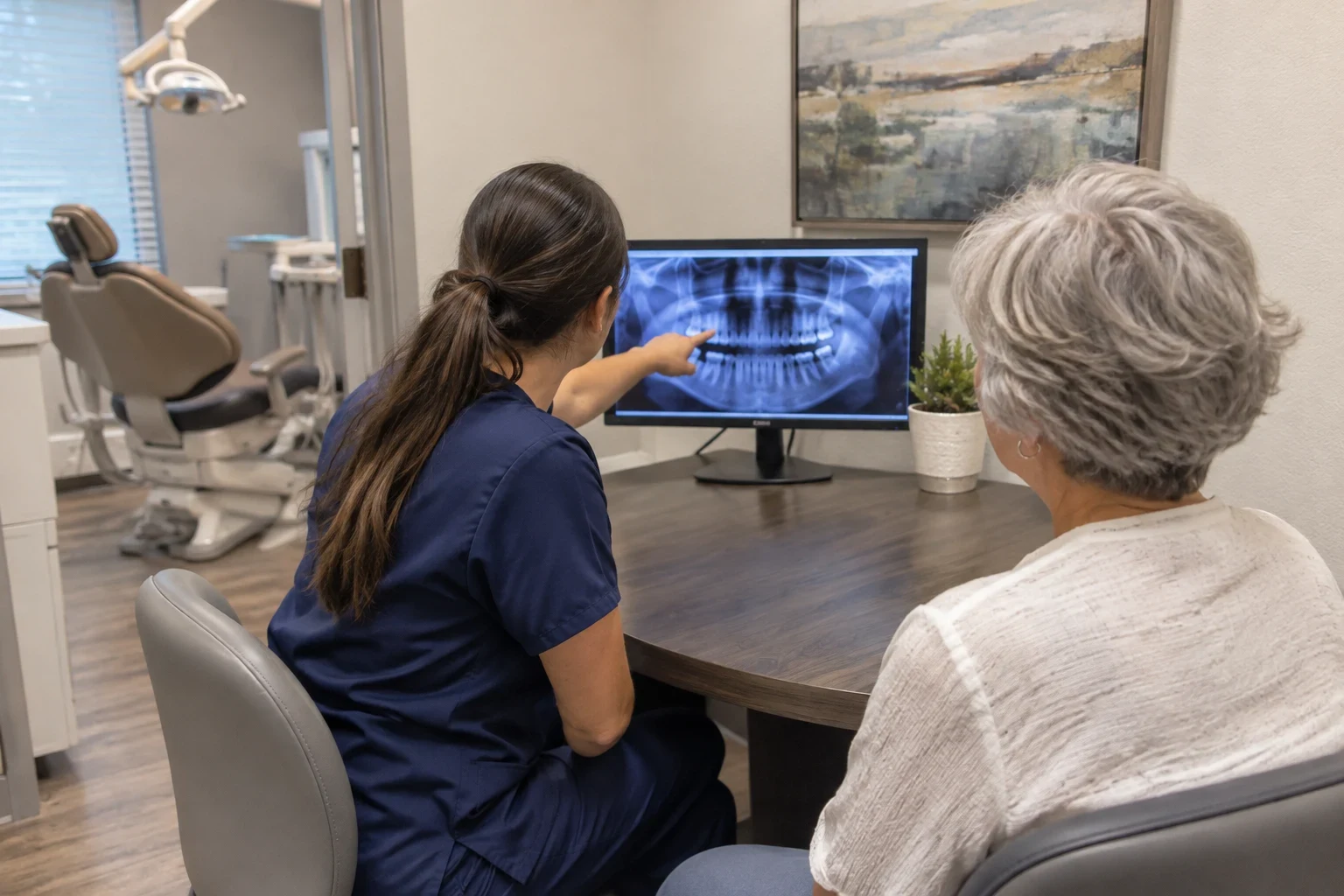
Book a $25 focused evaluation and we will image your wisdom teeth, show you what we see and give you an honest recommendation. If removal makes sense, we will plan it with you.