ServicesExtractions
Tooth Extractions in Double Oak, TX
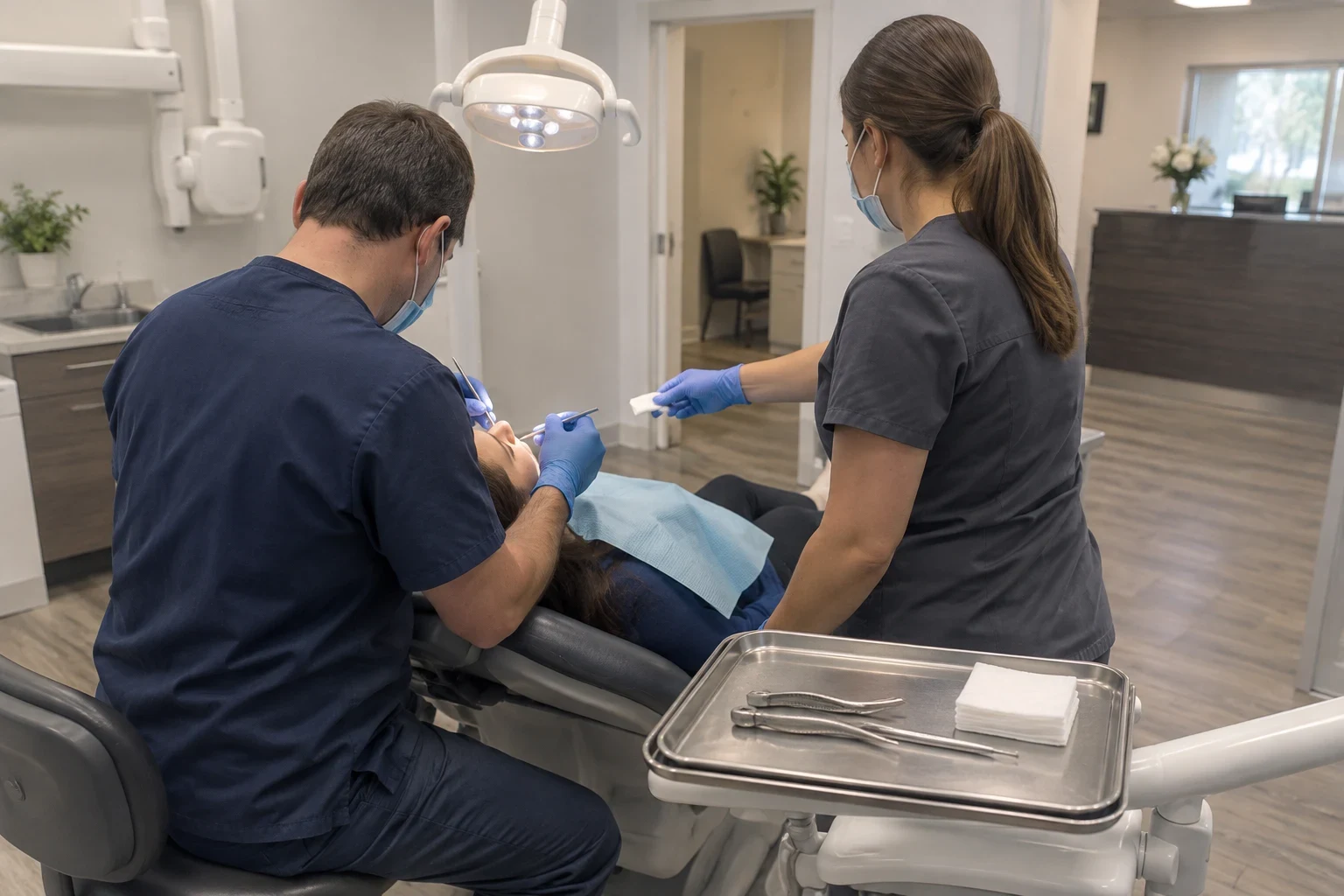
When a tooth is cracked past saving, badly decayed or loose, taking it out can end the pain. We look first, with an exam and digital X-rays, and tell you plainly whether the tooth can be kept. If it can't, we remove it gently and walk you through what comes next.
When pulling a tooth is the right call
An extraction is the last option, not the first. Many painful teeth can be saved with a filling, a crown or a root canal, and we will tell you when that is the case. We recommend removal when a tooth is split below the gumline, when decay has reached too deep into the root, when gum disease has left it loose, or when it is crowding the teeth around it.
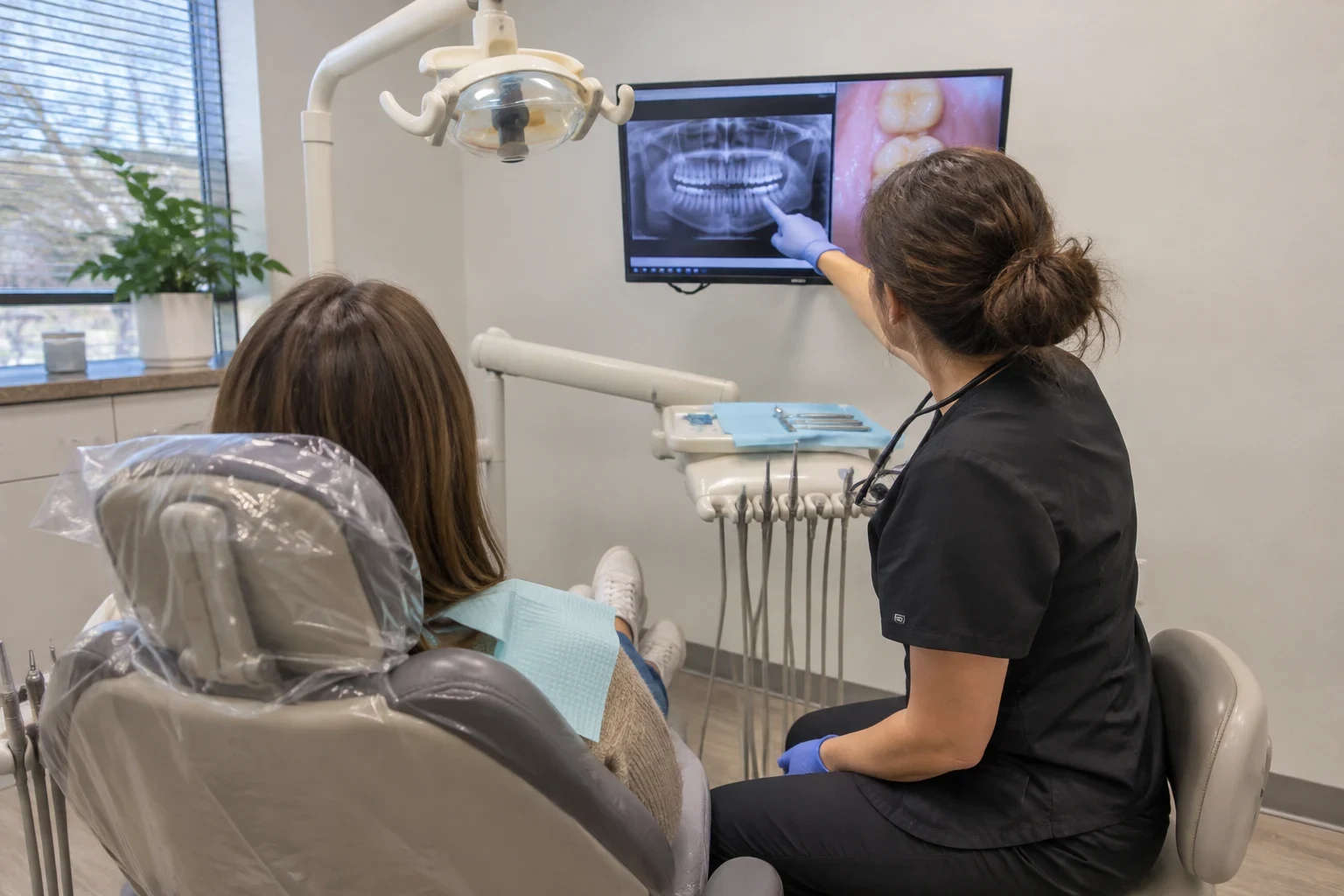
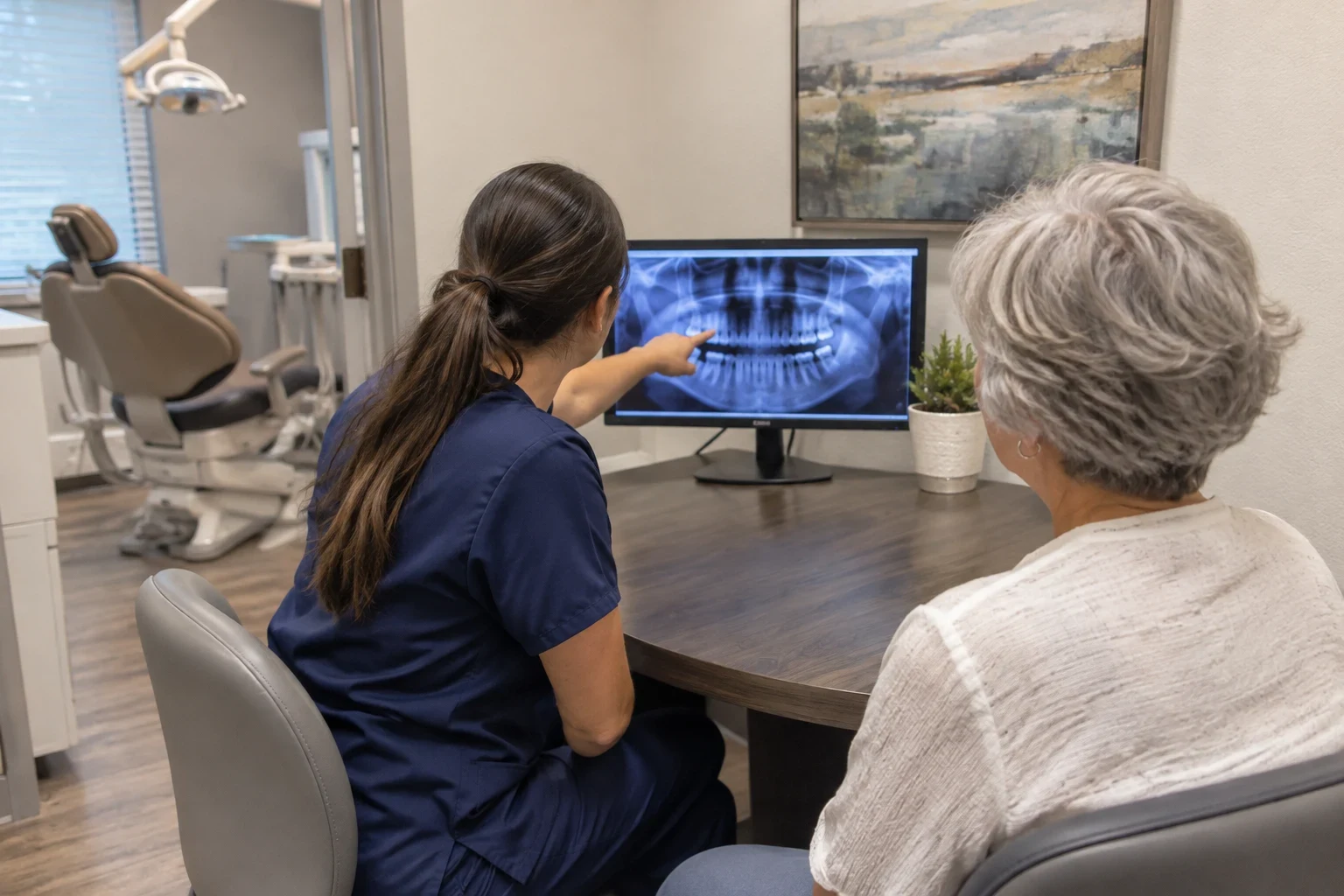
Before anything is decided, you get a careful look. That means a hands-on exam, digital X-rays, and a CBCT scan if the roots sit close to a nerve or sinus. We show you the images and explain what we see in plain words, so the choice makes sense to you before you agree to it.
Losing a tooth also affects its neighbors, which can drift into the gap over time. We plan for that from the start, so if you want to replace the tooth later with dental implants, a bridge or dentures, the path is already mapped out.
What your extraction visit includes
- Exam and imaging before any decision
- Digital X-rays show the shape of the roots and the bone around them. When a 3D view is needed, a CBCT scan pinpoints where nerves and sinuses sit.
- Thorough numbing
- Local anesthetic goes in first, and we confirm the area is fully numb before we start. Most patients describe firm pressure rather than pain.
- Simple or surgical removal
- A whole tooth above the gumline is gently loosened and lifted out. A broken tooth or one with curved roots may need a small opening in the gum or removal in sections, which is often gentler on the jaw than pulling it out in one piece.
- Clear instructions for healing
- We send you off with gauze, a printed sheet of care steps and a simple list of foods to enjoy or skip for the first few days.
- A plan for the gap
- We go over replacement choices, including dental implants and dentures, so you can decide when you're ready. Wisdom teeth have their own page, Wisdom Teeth Removal.
When removal may be the right answer
A split that reaches the root
If a crack ends above the gumline, a crown can often hold the tooth together. When it splits the root itself, the tooth usually can't be kept, and X-rays show us which case you have.
Swelling or a bump on the gum
This can signal an infection at the root. A root canal sometimes clears it and saves the tooth, and sometimes the damage is too far along.
A tooth that shifts when you bite
Advanced gum disease can wear away the bone around a tooth until it no longer stays firm.
Decay that broke the tooth apart
When a cavity leaves too little sound tooth to rebuild, removing it may be the safer path.
Preparing for dentures
Failing teeth sometimes need to come out before a denture can sit well. We check each tooth and keep any that are worth saving.
What shapes the fee for removing a tooth
How a tooth has to come out decides most of the fee, and we can't know that until we've examined it. Before any work starts, you see your treatment plan with each cost spelled out. We're in-network with 15+ major PPO dental insurance plans. Financing is available at 0% interest for up to 24 months, and checking for preapproval has no credit score impact.
Simple or surgical
An intact tooth that comes out cleanly needs less chair time than a broken one that calls for a small incision or removal in pieces.
How the roots sit
Long, hooked or firmly anchored roots need slower, more careful work. Some of these cases also need a CBCT scan to map nearby nerves or the sinus.
Number of teeth
Taking out several teeth at one visit, for example to prepare for dentures, changes both the plan and the total.
Insurance or membership
Your PPO plan may pick up part of the bill. Patients without coverage can join our In-house Membership Plan for uninsured patients.
How extraction day goes
- 1
Findings first
We review your images together, confirm the plan and answer your questions. Let us know about any medications, especially blood thinners, so we can plan safely.
- 2
Numbing and comfort checks
Once the area is numb, we check again before starting. You can raise a hand at any point and we will pause.
- 3
Removing the tooth
A simple extraction is often over quickly. We tell you what is happening as we go, so there are no surprises.
- 4
Gauze and aftercare
You bite on gauze to help a clot form. For the first few days, skip straws and smoking, since suction can loosen the clot and cause a painful dry socket.
- 5
Follow-up and next steps
We check how the site is healing and, when you're ready, talk about replacing the tooth.
Extraction questions we hear often
Will having a tooth pulled hurt?
We numb the area completely and test it before we begin, so what most patients notice is firm pushing, not sharp pain. Expect some tenderness for a few days afterward. Over-the-counter pain relievers are usually enough, and we'll tell you which ones suit you.
Can't you just save the tooth?
Often we can, which is exactly why the exam comes first. If a filling, crown or root canal will keep the tooth healthy, we'll tell you and lay out the pros and cons. Removal is our recommendation only when keeping the tooth would create more problems than it fixes.
How long does healing take?
Most people feel a lot better after a few days. The gum typically closes over the spot within a couple of weeks, and the bone beneath keeps rebuilding for several months. Sticking to your aftercare steps really does help.
Should I replace the tooth after it's removed?
If it's a chewing tooth or one that shows when you smile, replacing it is usually worth a look. An empty space lets neighboring teeth lean in and the bone gradually shrink. We can compare dental implants, bridges and dentures and explain how timing affects each.
I don't have dental insurance. Can I still be seen?
Yes. Our In-house Membership Plan for uninsured patients was set up for exactly this, and 0% interest financing for up to 24 months is also available. You'll know your costs before any treatment begins.
Get a clear look before any tooth comes out
The $25 focused evaluation covers a comprehensive exam, digital X-rays, a CBCT scan if needed, and treatment planning with a consultation. We sit down with you and explain what the images show. If removal turns out to be the right answer, we choose a time that suits your week.