ServicesDentures
Dentures in Double Oak, TX
Loose, sore or missing teeth make every meal a chore. We fit full, partial and implant-supported dentures, starting with a careful look at your gums, bone and any remaining teeth. Then we explain your options in plain words, so you can choose what fits your mouth and budget.
When dentures are the right choice
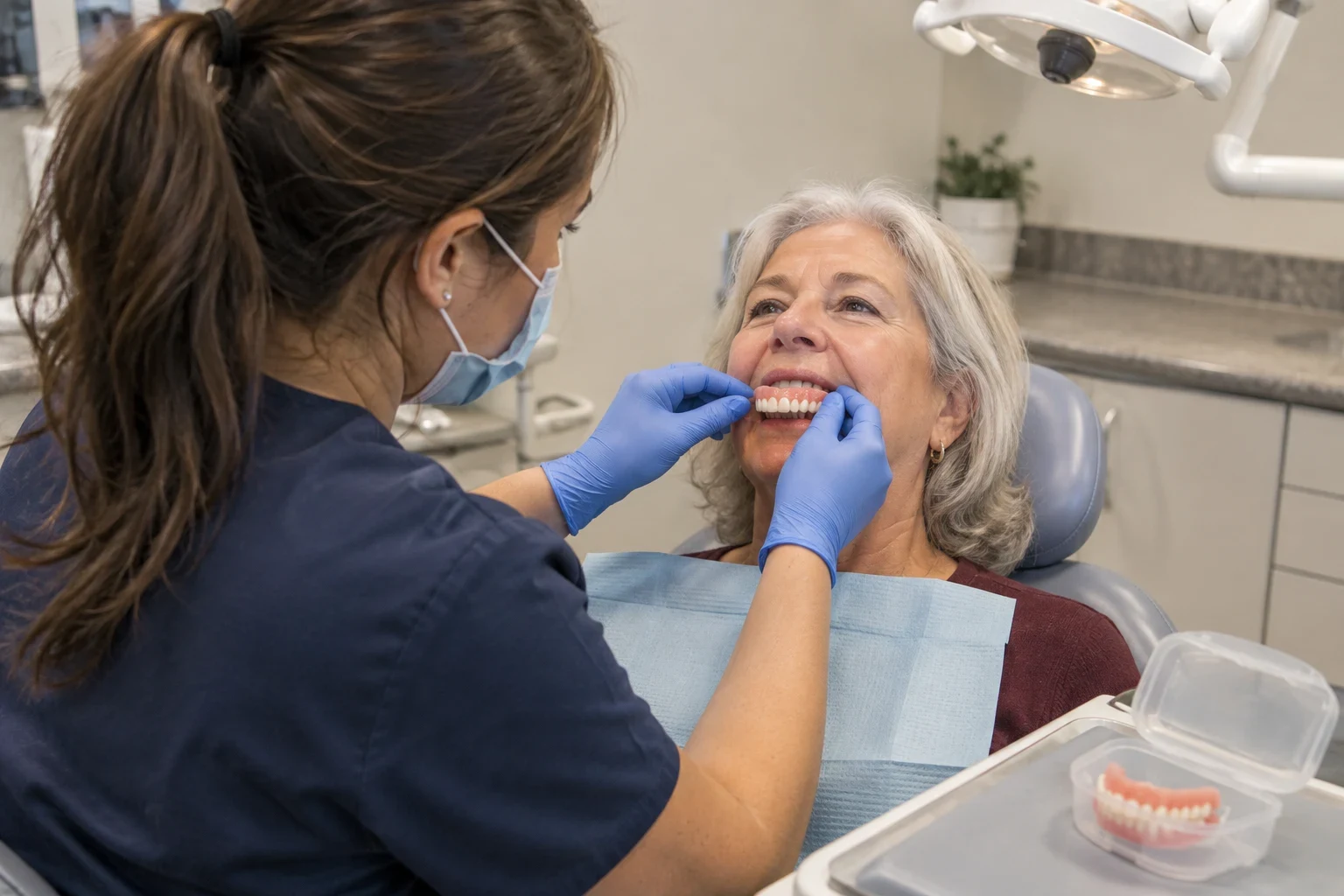
Dentures replace missing teeth with a removable set of teeth on a gum-colored base. A full denture replaces every tooth in an arch. A partial clips around the natural teeth you still have and fills the gaps between them. For many patients they are the quickest, most affordable way to chew comfortably and smile again.
They are not right for everyone, and we will tell you so. Before we recommend anything, we examine your mouth, take digital X-rays and look at how much bone supports your jaw. Sometimes a few healthy teeth are worth saving. Sometimes dental implants under the denture will hold it far better than suction alone. You hear what we found first, then the choices.
What our denture care covers
Full dentures
A complete upper or lower set for patients missing all their teeth in an arch. We shape the base to your gums so it seals well and does not rub.
Partial dentures
A removable partial fills gaps while keeping your healthy natural teeth in place. It also stops nearby teeth from drifting into the empty spaces.
Implant-supported dentures
Two or more dental implants anchor the denture so it snaps in and stays put. Patients who struggle with a loose lower denture often notice the biggest change. Our Dental Implants page explains how the implants themselves are placed.
Immediate dentures after extractions
If failing teeth need to come out, we can plan a denture you wear the same day as your extractions, so you never leave without teeth. Gums shrink as they heal, so this set is adjusted and relined along the way.
Relines, adjustments and repairs
Your jaw changes over the years. A reline refits the base to your gums, and small adjustments clear up sore spots before they turn into ulcers.
Signs it may be time for dentures
- Several missing teeth
- Gaps make chewing harder and can change the shape of your face over time. A partial or full denture restores both.
- Teeth that are loose or failing
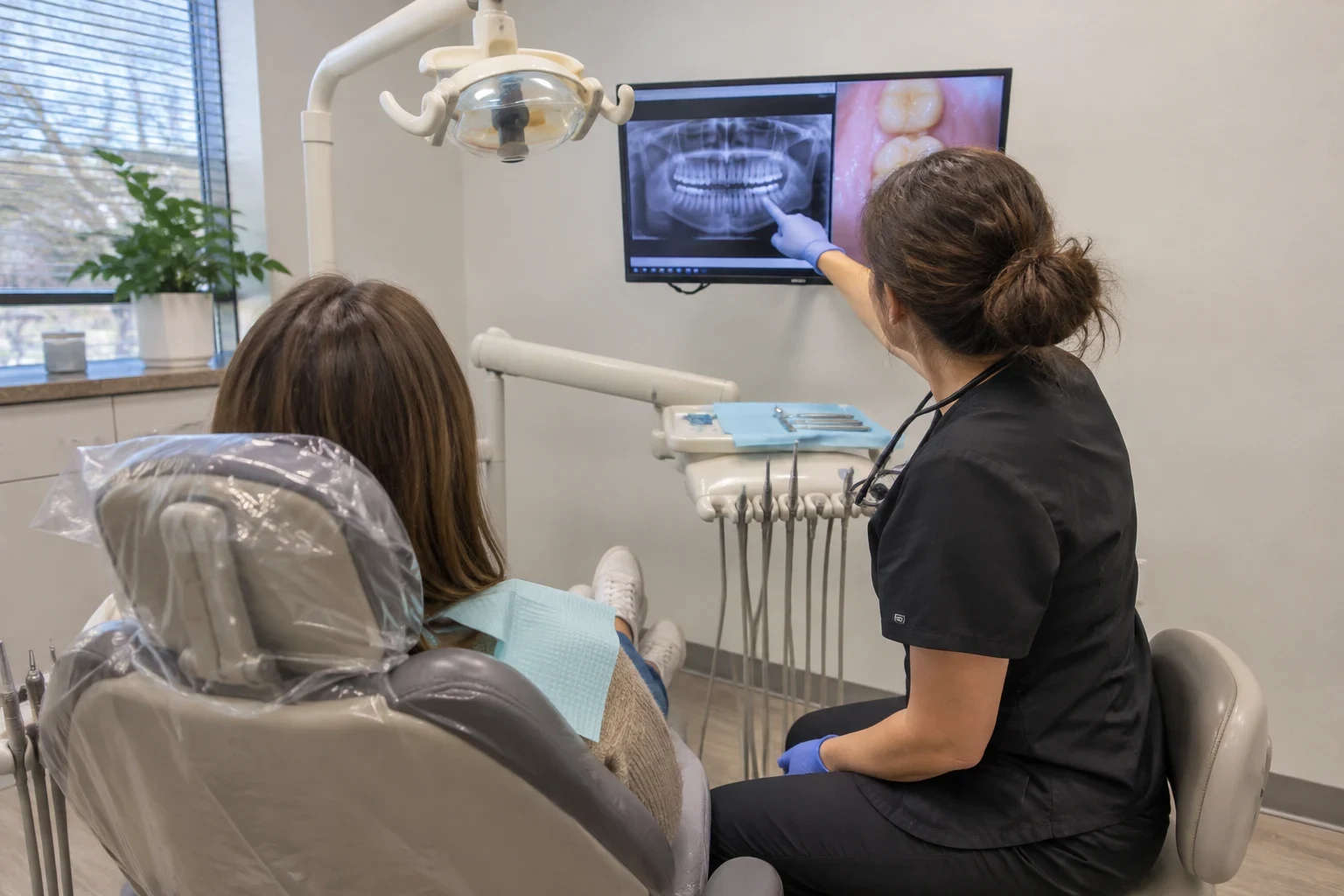
- Advanced gum disease or deep decay across many teeth can mean repairs no longer make sense. We will show you on the X-rays what can be saved.
- An old denture that slips
- If you use more adhesive every month or avoid certain foods, the fit has likely changed. A reline, a new set or implant support may fix it.
- Sore spots and clicking
- Rubbing, mouth sores or a clicking sound when you talk point to a denture that no longer matches your gums.
- Hiding your smile
- Many patients come in simply because they are tired of covering their mouth in photos. That is a good enough reason to talk it through.
How getting dentures works with us
- 1
Exam and honest findings
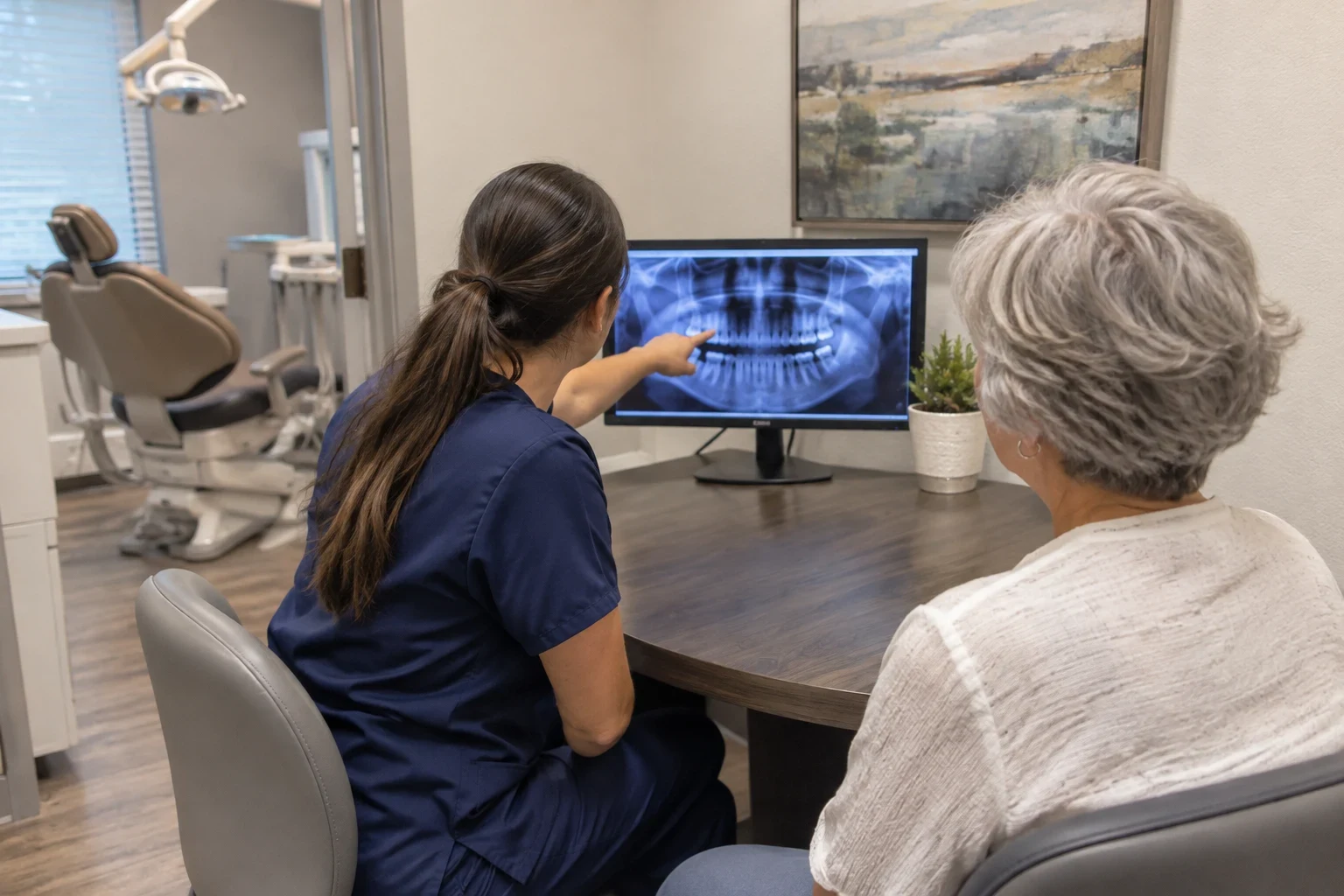
We check your gums, any remaining teeth and your bite, take digital X-rays, and add a CBCT scan if implants are on the table. Then we sit down and walk you through what we saw before suggesting a treatment plan.
- 2
Impressions and bite records
We take precise molds of your mouth and record how your jaws meet. You also help choose the shade and shape of your new teeth.
- 3
Try-in before the final set
A wax trial version lets you see the look and test the bite. We change anything that feels off, so the finished denture matches what you approved.
- 4
Fitting day
We place your new dentures, check pressure points and show you how to put them in, take them out and clean them. You leave knowing what the first few weeks will feel like.
- 5
Follow-up adjustments
New dentures usually need a few small tweaks as your mouth settles. We book those visits with you so sore spots get handled quickly.
What affects the cost of dentures
We can't price a denture until we've looked in your mouth, so every estimate starts with the exam. Before any work begins, you get the full treatment plan in writing, broken out line by line. Our office is in-network with 15+ major PPO dental plans. If you have no dental coverage, our in-house Membership Plan is another route.
- Full, partial or implant-supported
- A partial with metal clasps, a full conventional denture and a denture anchored on implants use very different materials and take a different number of visits.
- Extractions and healing
- When teeth have to come out first, the extractions and any immediate denture become part of the plan. If your gums are already healthy and ready, the plan stays simpler.
- Materials and number of arches
- One arch costs less than two. The tooth material and the quality of the base also move the price, and we walk you through the trade-offs.
- Insurance and financing
- Your PPO benefits set how much of the bill is yours, and we review them with you before treatment. To spread out payments, you can use our 0% interest financing for up to 24 months. Checking whether you preapprove does not affect your credit score.
Questions patients ask about dentures
- How long does it take to get dentures?
- It usually takes several visits over a few weeks for impressions, a try-in and the final fitting. If you need extractions first, immediate dentures let you have teeth right away while your gums heal. We give you a realistic timeline after the exam.
- Will my dentures hurt at first?
- Most patients feel some pressure and maybe a sore spot or two in the first weeks. That is normal and usually fixed with a quick adjustment. Call us instead of waiting it out, because small fixes are easy.
- Can I eat normally with dentures?
- Start with soft foods cut into small pieces and chew on both sides at once. Most patients work back to a fairly normal diet with practice. Implant-supported dentures hold much more firmly, which helps with tougher foods.
- Should I get dentures or dental implants?
- It depends on your bone, your gums, your budget and how many teeth you are missing. Many patients choose a middle path with a few implants holding a denture. After the exam we lay out each option side by side so you can decide.
- How long do dentures last?
- Your mouth keeps changing after teeth are lost, so most dentures need relines over time and eventually replacing. Regular checkups let us catch fit problems early. Taking them out at night and cleaning them daily helps them last.
Let's see what your smile needs
Most denture patients begin with our $25 Focused Evaluation. For that, you get a comprehensive exam and digital X-rays, a CBCT scan when one is called for, and a sit-down consultation where we plan your treatment together. People from Double Oak, Flower Mound, Highland Village and nearby towns start right here.